

Silicone is a high-performance elastomer used in applications where reliability, flexibility, stability and controlled material properties are essential.
EXSTO supports industrial companies in selecting, formulating and processing technical silicones adapted to their specific requirements: biocompatibility, thermal resistance, transparency, sealing performance, ageing resistance, food contact, medical compliance or production in controlled environments.
From medical silicone to demanding industrial applications, our teams help customers define the material, process and performance level best suited to their specifications.
What is a silicone elastomer?
Silicone is a polymer derived from silicon chemistry. It stands out for its stability, flexibility, inertness and ability to retain its properties in demanding environments.
Depending on the requirements, it can be formulated to meet a wide range of constraints: hardness, transparency, thermal resistance, ageing resistance, contact with fluids, biocompatibility, electrical properties or fire behaviour.
This adaptability makes silicone a reference material for medical, industrial, pharmaceutical, food-grade and technical applications.
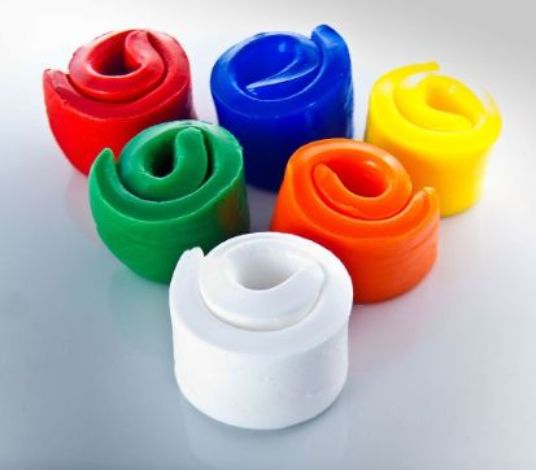
LSR, HCR, HTV, RTV: what are the main silicone families?
LSR Silicone: Liquid Silicone Rubber
LSR is a liquid silicone mainly processed by injection moulding. It is suitable for precise, complex or series-produced parts, especially when repeatability, automation and material cleanliness are important.
It is particularly used in medical devices, small technical parts and applications requiring a high level of manufacturing consistency.
HCR silicone : High Consistency Rubber
HCR is a firmer silicone gum that can be processed by compression moulding, injection moulding, extrusion, calendering or secondary fabrication.
It is suitable for tubes, cords, profiles, moulded parts and applications requiring a high degree of formulation or design flexibility.
HTV and RTV silicones
HTV silicones are crosslinked at high temperature and are used for a wide range of technical parts, tubes and profiles. RTV silicones crosslink at room temperature and can be used for sealing, bonding, protection or specific moulding applications.
Properties adapted to your application
One of the main advantages of silicone is its ability to be adjusted according to the final requirement.
Depending on the specifications, EXSTO can work on different parameters:
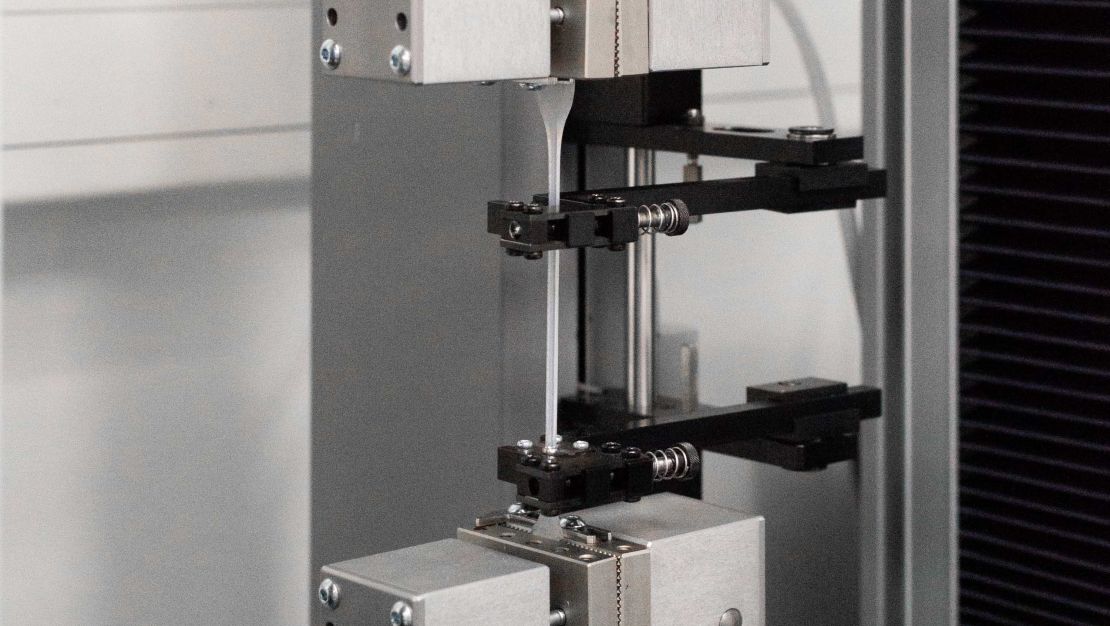
- Shore A hardness;
- flexibility and elongation;
- tear resistance;
- thermal resistance;
- transparency or colouring;
- radiopacity;
- food contact;
- biocompatibility;
- ageing resistance;
- behaviour in humid, hot or demanding environments;
- electrical properties;
- fire or smoke behaviour;
- resistance to certain fluids or chemical environments.
This flexibility makes it possible to develop custom silicone solutions for applications where a standard material is not enough.
Medical silicone and industrial silicone
EXSTO works on both medical silicone applications and high-performance industrial silicone applications.
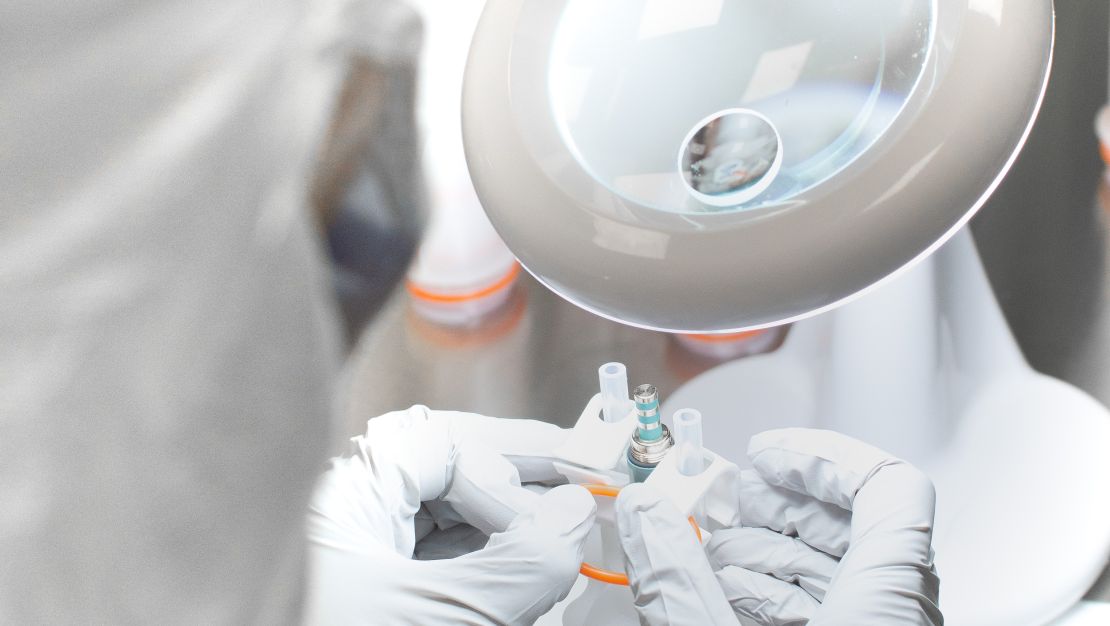
In the medical sector, silicone is used for its biocompatibility, flexibility, transparency, sterilisation compatibility and ability to meet strict quality and traceability requirements.
In industry, silicone is valued for its thermal resistance, ageing resistance, electrical properties, sealing behaviour and ability to be processed into tubes, seals, profiles, moulded parts or technical sub-assemblies.
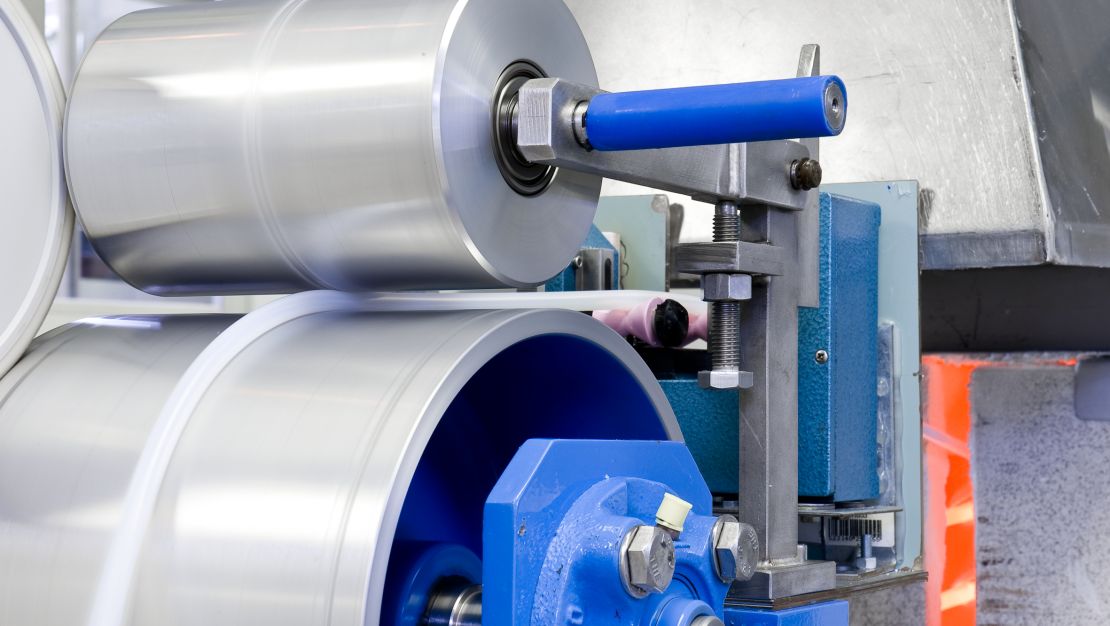
This dual expertise enables EXSTO to provide a consistent response, from simple components to critical elastomer solutions.
Our silicone processing capabilities
EXSTO masters several silicone processing techniques in order to adapt the solution to the required geometry, volume, precision level and production environment.
Our expertise includes:
- silicone moulding;
- overmoulding;
- extrusion of tubes, cords and profiles;
- co-extrusion;
- secondary fabrication;
- assembly;
- prototyping;
- material testing;
- industrialisation.
This expertise enables us to support projects from the development phase through to series production.
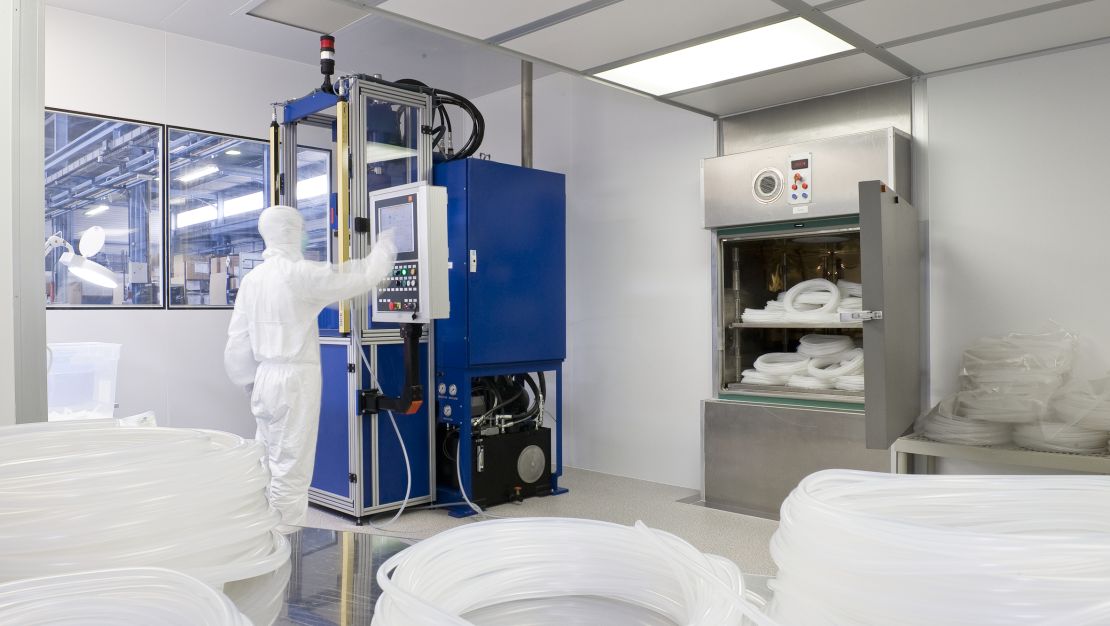
Silicone ranges based on EXSTO expertise
Beyond standard silicones, EXSTO draws on longstanding expertise in material formulation and development.
Several silicone ranges are available to meet specific needs:
- SWELLSIL®: cellular silicones;
- STIRLENE®: high-temperature silicones;
- ELASTALERN®: fluorocarbon silicones;
- STILUVENE®: silicones optimised for UV crosslinking;
- STIRMOTIV®: elastomers for fire / smoke applications;
- STAMINALENE®: high-endurance silicones;
- DIODON®: inflatable silicone seals;
- HIGHTUBE®: high-performance silicone tubes.
These ranges illustrate EXSTO’s ability to offer more than just a material: a silicone solution adapted to the final use, the manufacturing process and the real constraints of the application.
What applications can silicone be used for?
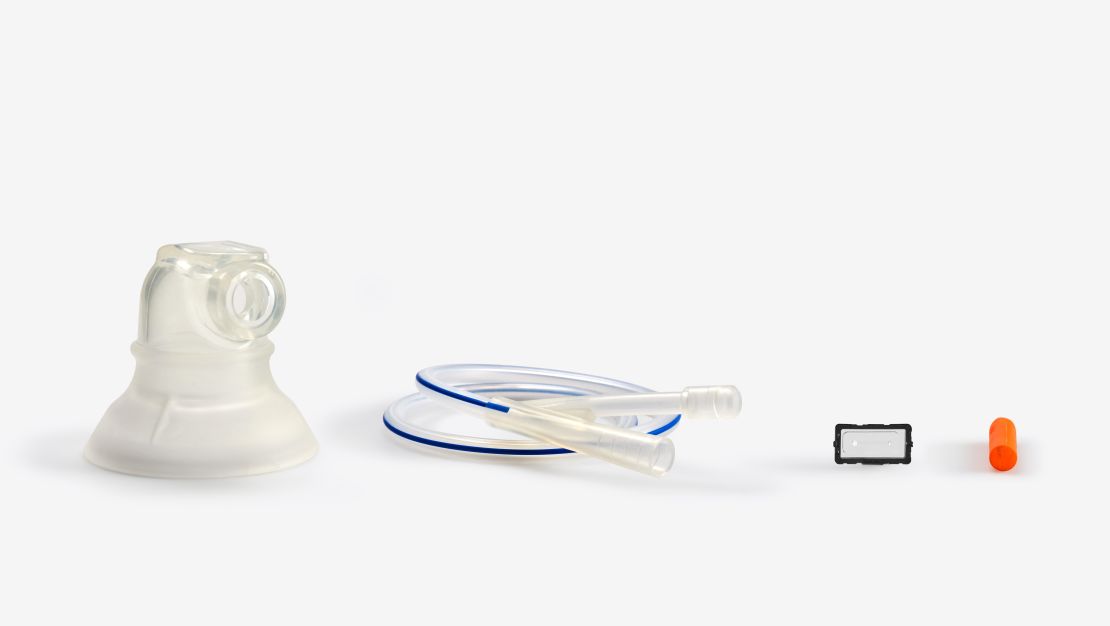
Silicone is particularly suitable for applications requiring flexibility, stability, sealing performance, compliance or long-term resistance.
Examples of applications:
- silicone tubes for fluid transfer;
- tubes for peristaltic pumps;
- standard or custom silicone seals;
- inflatable seals;
- technical moulded parts;
- overmoulded parts;
- silicone profiles and cords;
- components for medical devices;
- protection or insulation parts;
- assembled silicone sub-assemblies;
- sealing solutions for industrial equipment.
The choice of silicone always depends on the final use: temperature, environment, mechanical constraints, contact with the body or fluids, cleanliness level, production volume and regulatory requirements.
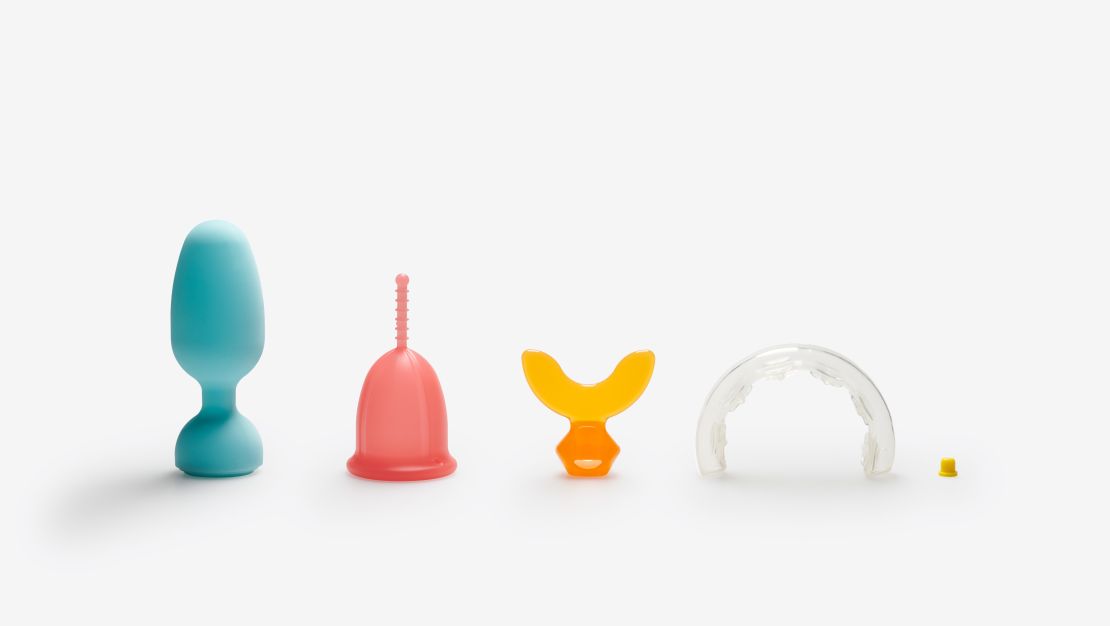
Support from material selection to production
Choosing a silicone is not limited to a technical data sheet. To guarantee the performance of the final part, the formulation, hardness, process, geometry, quality controls and real conditions of use must all be aligned.
EXSTO supports its customers at every stage:
- needs analysis;
- selection of the right silicone;
- orientation towards LSR, HCR, HTV or RTV;
- choice of catalyst system;
- formulation or material adaptation;
- prototyping and testing;
- selection of the processing method;
- industrialisation;
- production;
- traceability and quality support.
Our objective: to help our customers make their critical applications more reliable through silicone solutions that are adapted, industrialisable and durable.
Looking for a custom silicone solution?
Are you developing a silicone part, tube, seal, profile, medical component or industrial application?
Our teams can help you define the material, process and performance level best suited to your project.
Contact our silicone experts to discuss your application.FAQ
-
What is the difference between LSR and HCR?
LSR is a liquid silicone mainly processed by injection moulding. It is suitable for precise, complex or series-produced parts. HCR is a firmer silicone gum used in moulding, extrusion, calendering or secondary fabrication.
-
Can silicone be used for medical applications?
Yes. Silicone is widely used in medical devices due to its biocompatibility, flexibility, transparency, sterilisation compatibility and stability. The exact choice depends on the application, the level of contact and the applicable regulatory requirements.
-
What parts can be manufactured from silicone?
Silicone can be used to manufacture tubes, seals, profiles, cords, moulded parts, overmoulded parts, inflatable seals, assembled sub-assemblies and components for medical devices and industrial equipment.
-
How do you choose the right silicone?
The choice depends on several criteria: temperature, mechanical constraints, chemical environment, service life, contact with fluids, regulatory requirements, production volume and processing method.
-
Does EXSTO offer specific silicone ranges?
Yes. EXSTO draws on several silicone ranges historically developed by Sterne, including SWELLSIL®, STIRLENE®, ELASTALERN®, STILUVENE®, STIRMOTIV®, STAMINALENE®, DIODON® and HIGHTUBE®.