

In some applications, sealing performance cannot be achieved effectively with a standard compression seal. Variable gaps, frequent opening cycles, sensitive surfaces, temperature constraints or the need for controlled contact pressure: in these cases, an inflatable silicone seal becomes a particularly relevant solution.
Thanks to controlled pressurisation, the seal conforms to the area to be sealed at the right moment, then retracts when deflated to facilitate opening, movement or equipment maintenance.
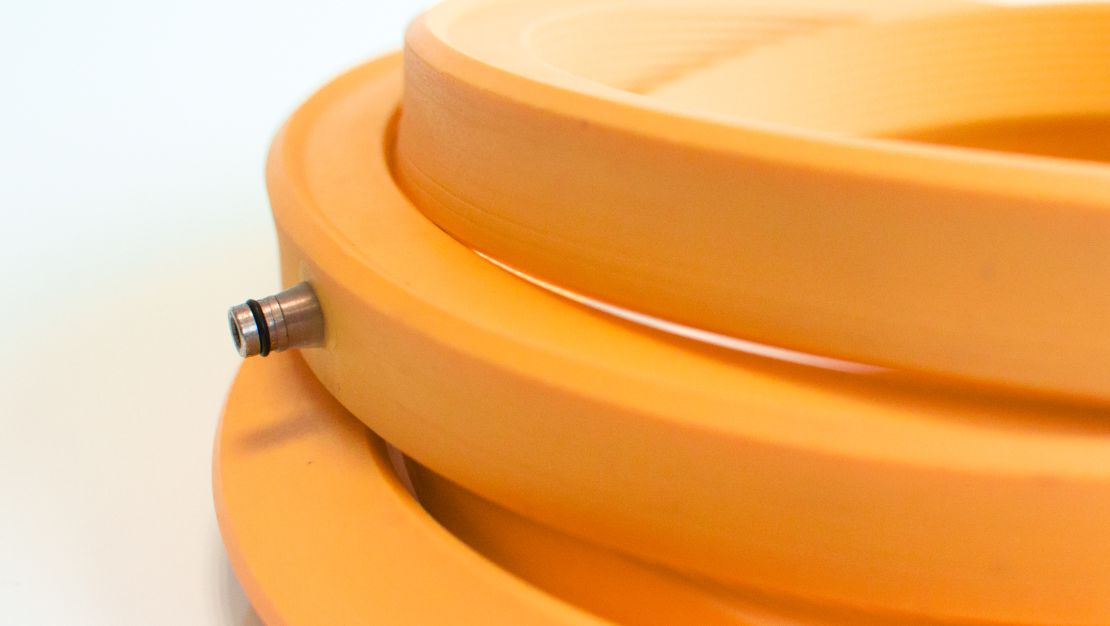
What is an inflatable seal used for?
An inflatable seal is a hollow silicone profile designed to deform under internal pressure, using air, gas or liquid depending on the application.
When inflated, the seal applies controlled pressure against the opposite surface. When deflated, it frees up the passage and facilitates opening, movement or maintenance.
This solution is particularly relevant when conventional compression sealing reaches its limits:
- significant gaps between two parts;
- repeated opening and closing requirements;
- moving or slightly irregular surfaces;
- pressure variation between two environments;
- temperature constraints;
- need for constant, controlled pressure;
- risk of marking or excessive stress on the parts in contact.
We do not leave sealing performance to chance: we design it, control it and make it reliable.
Why choose silicone?
Silicone is particularly well suited to inflatable seals thanks to its flexibility, deformation capacity, ageing resistance and ability to withstand thermal and environmental constraints.
At EXSTO, we work with different families of silicones depending on the requirements of the application:
- HCR silicones, or silicone rubbers;
- peroxide or platinum curing systems;
- formulations adapted to mechanical, thermal, medical or food-contact constraints;
- specific hardnesses, colours and properties according to specifications.
This formulation and processing capability enables us to design inflatable seals for demanding environments: medical, pharmaceutical, food processing, cosmetics, industrial processes, transport and special equipment.
Inflatable seals designed around your constraints
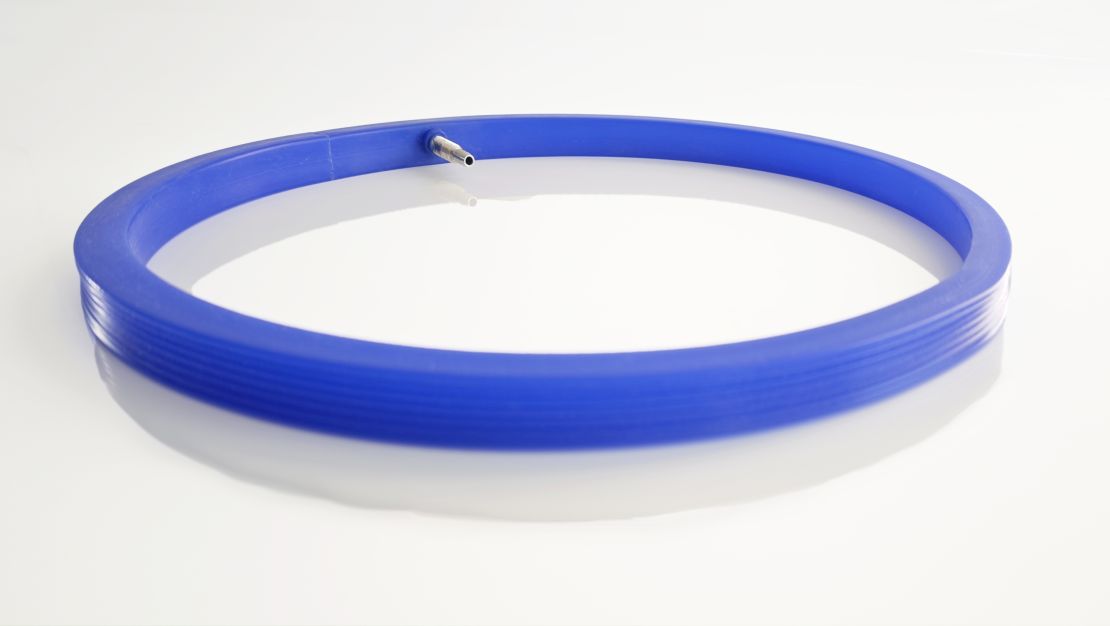
Each inflatable seal is developed according to the real operating conditions of the equipment.
Our teams take into account:
- the geometry of the area to be sealed;
- the type of movement or opening;
- the inflation pressure;
- the pressure differential between environments;
- the operating temperature;
- inflation and deflation cycles;
- cleanliness, compliance or traceability requirements;
- the type of connector, valve or supply system;
- installation, removal and maintenance constraints.
The seal can be manufactured as a ring, a frame, a capped straight length or according to a specific geometry. Valves, rigid connectors or flexible fittings can be integrated depending on the needs of the application.
Applications of inflatable silicone seals

Medical, pharmaceutical and biotechnology
For equipment requiring cleanliness, precision and material control: airlocks, enclosures, laboratory equipment, autoclaves, closure systems, glove boxes, transfer systems and controlled environments.
Food processing and cosmetics
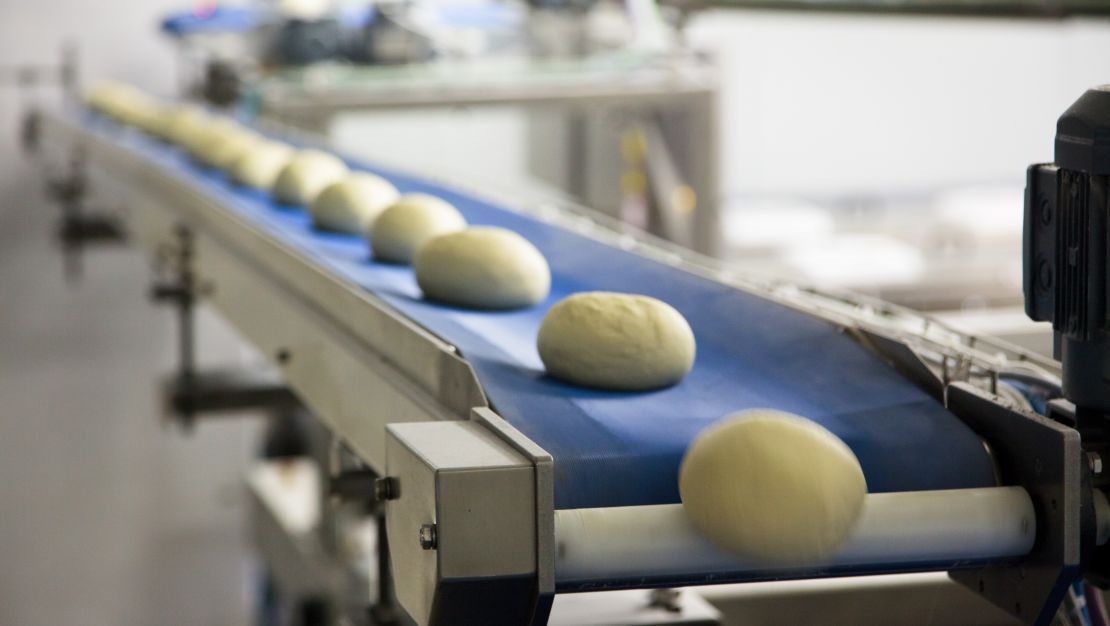
For sealing containers, hoppers, chambers, transfer systems, autoclaves, dosing areas or equipment exposed to frequent opening cycles.
Industry and process equipment
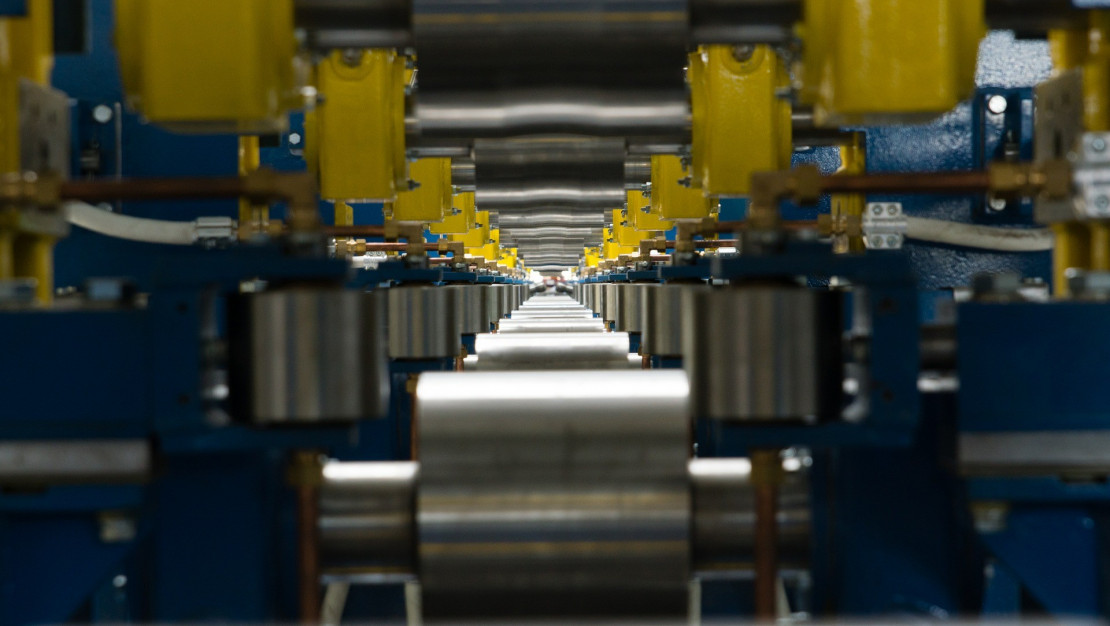
For doors, airlocks, insulated chambers, containers for powders, liquids or bulk products, as well as equipment requiring reliable separation between two environments.

Transport, energy and critical applications
For systems exposed to temperature, pressure, vibration or regular maintenance constraints.
What makes EXSTO different
We support the design of a sealing solution adapted to your equipment, your environment and your industrial constraints.
Our strengths:
- silicone expertise;
- custom design according to specifications;
- possible integration of valves and connectors;
- prototyping, testing and industrialisation;
- production in an industrial or controlled environment depending on requirements;
- quality control adapted to the application;
- traceability and documentation according to project needs.
Control and validation
The performance of an inflatable seal depends as much on its design as on its validation.
Depending on the application, EXSTO can define adapted control protocols: pressure resistance testing, dimensional checks, validation of inflation behaviour, sealing performance verification, document tracking and archiving of control data.
The objective: to secure the performance of the seal before it is integrated into your equipment.
Do you have a specific sealing requirement?
Are you developing equipment that requires controlled sealing between two environments?
Are you reaching the limits of a conventional compression seal?
Do you need to compensate for a significant gap, facilitate the opening of a system or guarantee constant contact pressure?
Our teams can help you define the most suitable solution.FAQ
-
What is an inflatable silicone seal?
An inflatable silicone seal is a hollow profile that deforms when pressurised. It provides controlled sealing between two surfaces, particularly when gaps are significant or openings are frequent.
-
When should an inflatable seal be used instead of a standard seal?
An inflatable seal is relevant when conventional compression sealing is not sufficient: variable gaps, moving parts, regular opening requirements, controlled contact pressure, sensitive surfaces or demanding environments.
-
Are EXSTO inflatable seals custom-made?
Yes. Inflatable seals are designed according to the geometry, pressure, cycles, temperature constraints, compliance requirements and integration conditions specific to each application.
-
Which sectors use inflatable silicone seals?
Inflatable silicone seals are used in medical, pharmaceutical, food processing, cosmetics, industry, transport, energy and technical equipment requiring reliable sealing performance.
-
Why use silicone for an inflatable seal?
Silicone offers good flexibility, high deformation capacity, ageing resistance and valuable thermal properties. It can also be adapted to demanding environments, particularly medical, food-contact or industrial applications.